I ordered a Vibroplex Iambic Deluxe today.
I am hoping to see it before December third.
Here are some of the e-Ham reviews I read. click here
I also talked to several hams before my purchase. What do I have to loose? I am new to CW.
I ordered a Vibroplex Iambic Deluxe today.
 is a value that is used most notably in spaceflight. The beta angle determines the percentage of time an object such as a spacecraft in low Earth orbit (LEO) spends in direct sunlight, absorbing solar energy. Beta angle is defined as the angle between the orbit plane and the vector from the sun (which direction the sun is shining from).The beta angle is the smaller angle (there are two angles) between the sun vector (where the sun is shining from in the sky) and the plane of the object's orbit. Note that the beta angle does not define a unique orbit plane; all satellites in orbit with a given beta angle at a given altitude have the same exposure to the sun, even though they may be orbiting in completely different planes around the Earth.The beta angle varies between +90° and -90°, and the direction the satellite revolves around the body it orbits determines whether the beta angle sign is positive or negative. An imaginary observer standing on the sun defines a beta angle as positive if the satellite in question orbits in a counter clockwise direction and negative if it revolves clockwise. The maximum amount of time that a satellite in a normal low Earth orbit mission can spend in the Earth's shadow occurs at a beta angle of zero. In such an orbit, the satellite is in sunlight no less than 59% of the time.
Launch window is a term used in spaceflight to describe a time period in which a particular launch vehicle (rocket, Space Shuttle, etc.) must be launched. If the rocket does not launch within the "window", it has to wait for the next window.[1]
For trips into largely arbitrary Earth orbits, almost any time will do. But if the spacecraft intends to rendezvous with a space station (such as the International Space Station) or another vehicle already in an orbit, the launch must be carefully timed to occur around the times that the target vehicle's orbital plane intersects the launch site.
For launches above low Earth orbit (LEO), the actual launch time can be somewhat flexible if a parking orbit is used, because the inclination and time the spacecraft initially spends in the parking orbit can be varied. See the launch window used by the Mars Global Surveyor spacecraft to the planet Mars at [1].
To go to another planet using the simple low-energy Hohmann transfer orbit, if eccentricity of orbits is not a factor, launch windows are periodic according to the synodic period; for example, in the case of Mars the period is 2.135 years, i.e. 780 days. In more complex cases, including the use of gravitational slingshots, launch windows are irregular. Sometimes rare opportunities arise such as when Voyager 2 took advantage of 175 year planetary alignment (launch window) to visit Jupiter, Saturn, Uranus and Neptune. When such an opportunity is missed, another target may be selected. For example, the Rosetta mission of ESA was originally intended for comet 46P/Wirtanen, but a launcher problem delayed it and a new target had to be selected (comet 67P/Churyumov-Gerasimenko).
Launch windows are often calculated from porkchop plots that show the delta-v needed to achieve the mission, plotted against the launch time.
| ARRL Sweepstakes Contest, SSB | Nov 20-22 |
| NA Collegiate ARC Championship, SSB | Nov 20-22 |
| Run for the Bacon QRP Contest | Nov 22 |
| SKCC Sprint | Nov 24 |
| QRP Fox Hunt | Nov 24 |
| RSGB 80m Club Sprint, CW | Nov 24 |
| QRP Fox Hunt | Nov 26 |
| NCCC Sprint | Nov 26 |
| CQ Worldwide DX Contest, CW | Nov 27-28 |

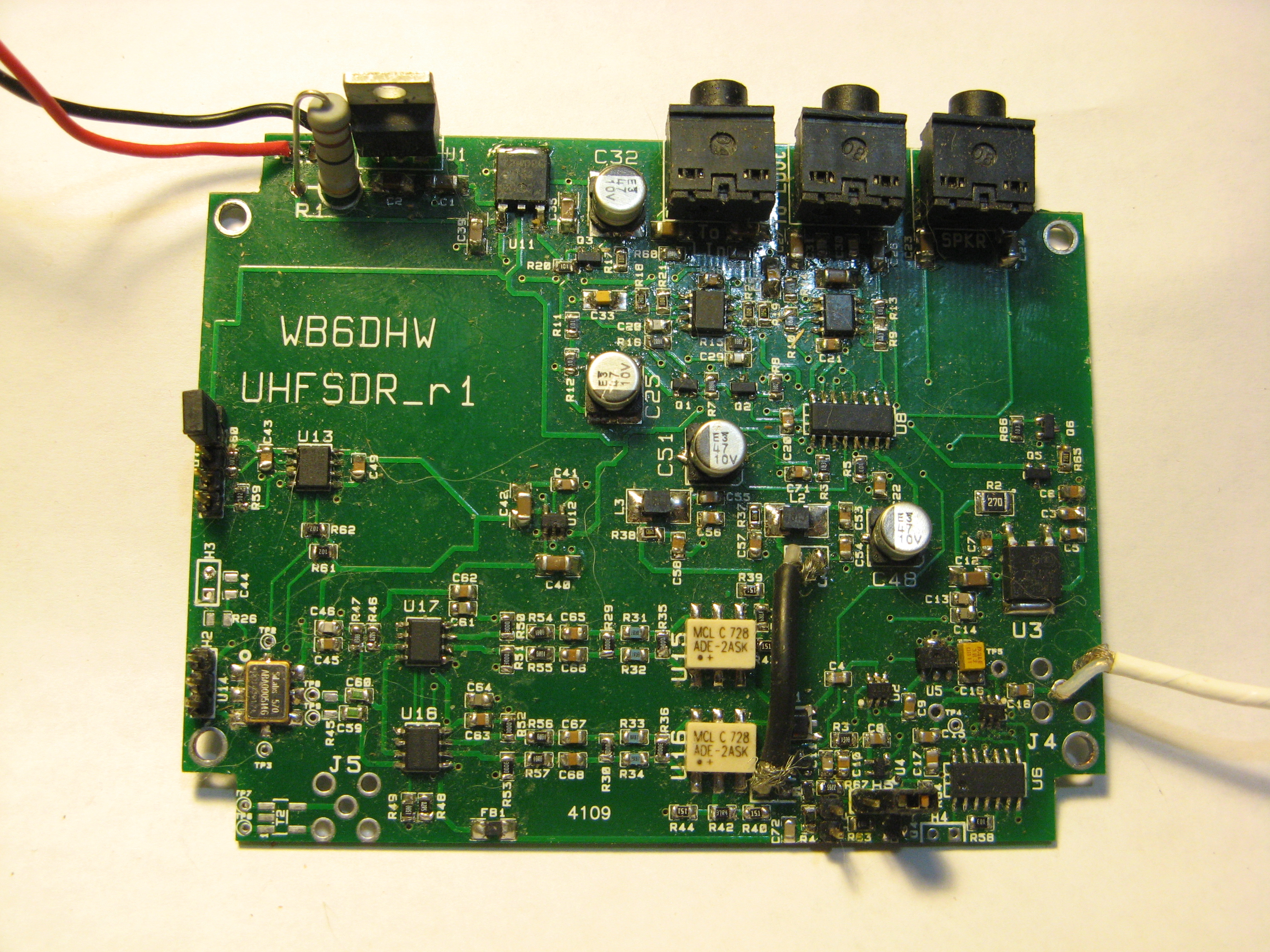
A receiver pre-amp (2dB noise figure) and a transmit pre-amp(50mW max output) are provided as well as antennal switching plus provision for separate receive and transmit connections.
For additional information, download the Assembly Manual.
The BOM, schematic, and board layout are Here.
A HiRes(3.7MByte.) picture of the completed board is Here
Link to WD6DHW’s Website
Not Ham related, but cool indeed. Having been a guitar player for 35 years I think this is pretty cool. I know many hams who also have battles with the six string axe.
----------------------------------------------------
Everyone knows that you can't really get that full live rock and roll experience without shoving your head against the amp. That said, sometimes it's hard to find a nearby Marshall stack--like, say, when you're at the office or on the subway.
These new Marhsall-branded headphones may be the next thing. At the very least, they sort of look like a pair of amps strapped to the sides of your head.
"These headphones are conceived from Marshall's time-tested fundamentals of performance and endurance, designed to thrive on daily use and to render music the way it was meant to sound, no matter what your flavor is," the company writes in a press release. "The greatest of effort has also been put into the aesthetics, making the headphones ooze of that iconic Marshall look."
If you don't mind a little oozing next to your ears, these things look downright snazzy. Well, at least wall two inches of what we've seen thus far.
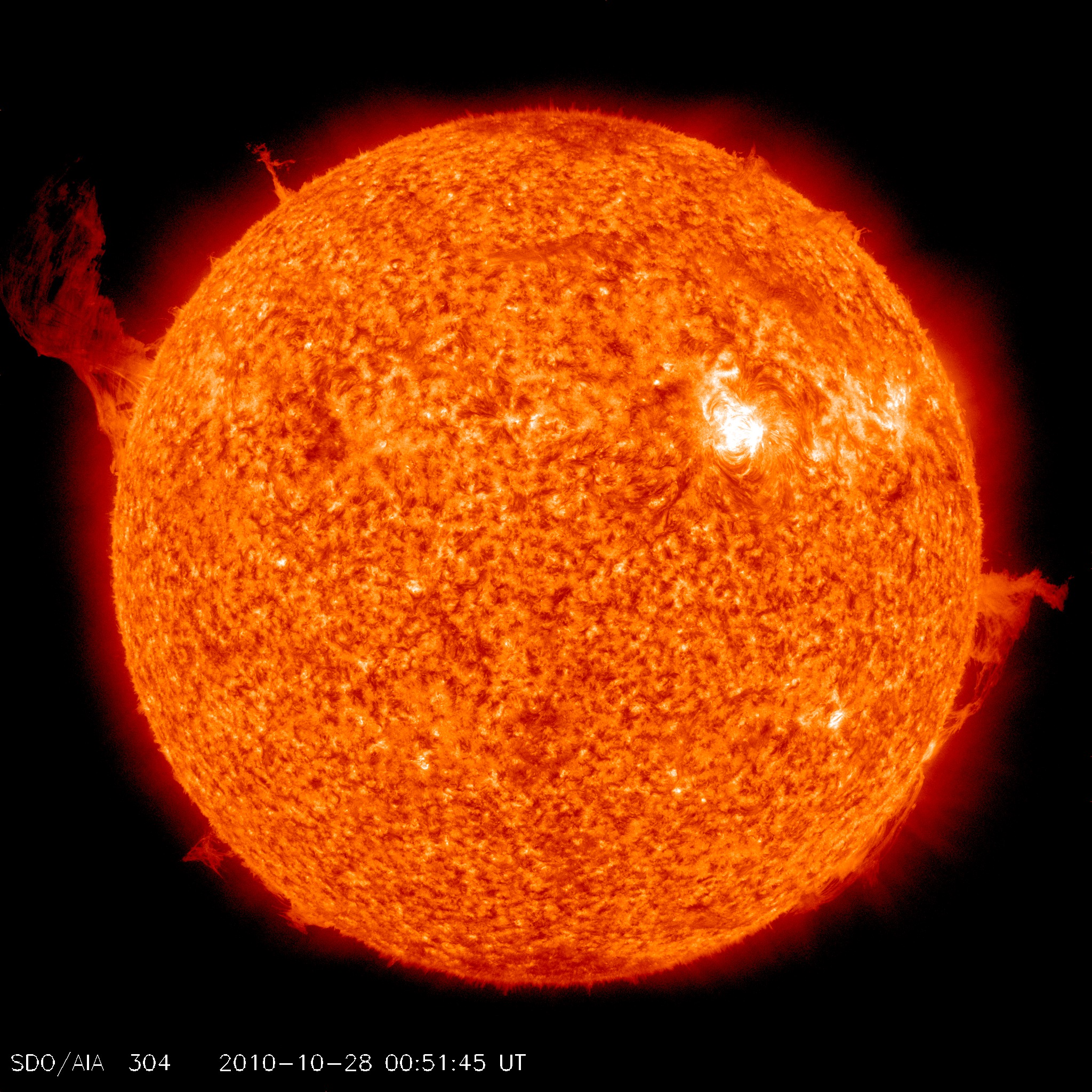
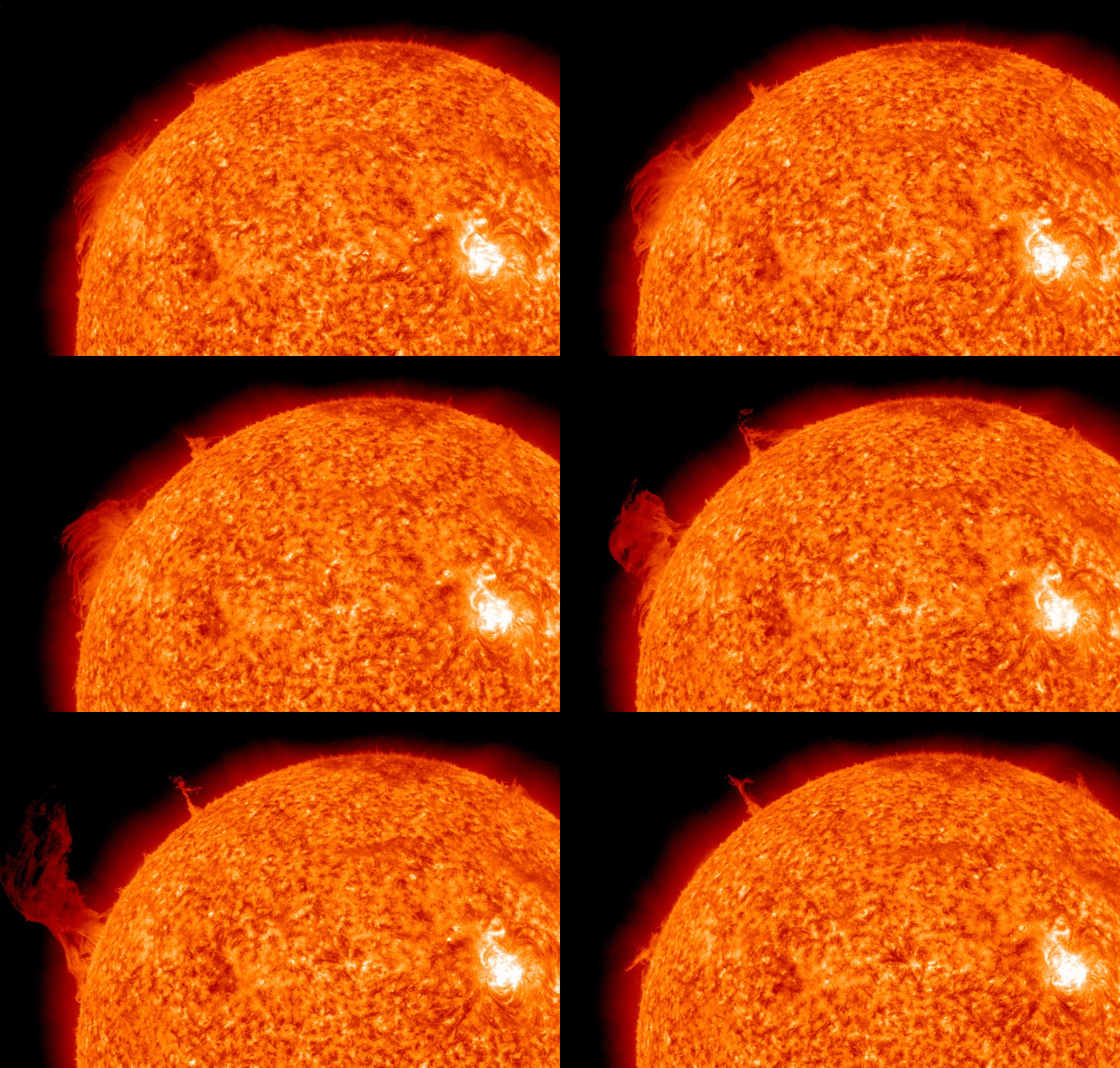
 Earlier today (Oct. 28th) a twisted filament of magnetism on the sun suddenly untwisted. The result was a spectacular eruption recorded in full-disk detail by NASA's Solar Dynamics Observatory.
At its peak, the twister--or rather, untwister--towered more than 350,000 km above the stellar surface. It appears to have hurled a fragment of itself into space, but not toward Earth; the blast was not geoeffective.
Now that the filament has relaxed, it is unlikely to erupt again. The next blast is more likely to come from big sunspot 1117, which NOAA forecasters say could produce an M-class solar flare.
 UPDATE; Click Here