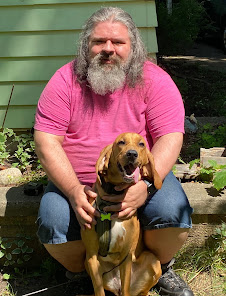
Lots to do today. DX is in the top 5 list. I may only have an hour or two better than nothing.
Stay tuned to my Twitter Account for more info.
http://twitter.com/#!/KD8BIG
------------------------------------------
*Radio communication still kicking (New Zealand)
*Being blind doesn't slow down Marshalltown man (Iowa)
*Valley ham radio group raising funds to replace trailer (Alaska)
*FCC Sends License Renewal for K1MAN to Administrative Law Judge
*SA AMSAT Cubesat project needs programmers
*Solar Report 0950 16 Jan 2011
*Forecast Space Weather 0950 16 Jan 2011
Sunday, January 16, 2011
Friday, January 14, 2011
New Amateur Radio Bill Introduced in Congress
The Amateur Radio Emergency Communications Enhancement Act, which died at the end of the 111th Congress, has been reintroduced in the 112th Congress as HR 81 http://www.thomas.gov/cgi-bin/query/D?c112:2:./temp/%7Ec1129bpLP1::. The sponsor is Representative Sheila Jackson Lee (D-TX-18). The new bill -- which was introduced on January 5 -- has been referred to the House Committee on Energy and Commerce. "We are hopeful that this early start will lead to success in the new Congress," commented ARRL Chief Executive Officer David Sumner, K1ZZ.
Rep Jackson Lee first introduced the bill -- HR 2160 http://www.arrl.org/hr2160 -- in the 111th Congress in April 2009 http://www.arrl.org/news/houston-representative-introduces-amateur-radio-bill-in-congress. It gained an additional 41 cosponsors but did not progress out of the committee of jurisdiction. A similar bill introduced in the Senate -- S 1755 http://www.arrl.org/news/senate-introduces-companion-bill-to-hr-2160 -- made it all the way through that body in December 2009, but likewise was not taken up by the House. The objective of the bill -- which is supported by the ARRL -- is for the Secretary of Homeland Security to study the uses and capabilities of Amateur Radio communications in emergencies and disaster relief and to identify and make recommendations regarding impediments to Amateur Radio communications, such as the effects of private land use regulations on residential antenna installations.

Tuesday, January 11, 2011
DXØDX POSTPONEMENT
I saw this on Twitter; DXØDX POSTPONEMENT
I know of several hams who was looking forward to this.
----------------------------------------------------
To the DX Community at large – It’s with regret that as Team Leader, I have to announce the postponement of the DXØDX Spratly Islands DXpedition 2011, due to circumstances beyond the control of the DXØDX Team.
To read more; click here
I know of several hams who was looking forward to this.
----------------------------------------------------
To the DX Community at large – It’s with regret that as Team Leader, I have to announce the postponement of the DXØDX Spratly Islands DXpedition 2011, due to circumstances beyond the control of the DXØDX Team.
To read more; click here
Monday, January 10, 2011
My Weekend
I had intended on spending some time working DX over the weekend, it was a good plan but fell apart rather quick Saturday afternoon.
In the morning I made a few contacts on 20 & 40 meters. I was hoping to hear special event station VE8SUN but never heard them. I made contact with Alabama, Florida and New York stations. Other than that the pileups were big on SSB.
While trying to get through to some stations I started playing around with some newly acquired stamps and logged them into my files and next thing I know the radio was off and I was tying flies, then the NFL games started followed by Red Wings Hockey. That was my Saturday.
Sunday was even worse; I never got the radio on, never touched any stamps and did not even make one fly.
Maybe this week I will have better luck.
In the morning I made a few contacts on 20 & 40 meters. I was hoping to hear special event station VE8SUN but never heard them. I made contact with Alabama, Florida and New York stations. Other than that the pileups were big on SSB.
While trying to get through to some stations I started playing around with some newly acquired stamps and logged them into my files and next thing I know the radio was off and I was tying flies, then the NFL games started followed by Red Wings Hockey. That was my Saturday.
Sunday was even worse; I never got the radio on, never touched any stamps and did not even make one fly.
Maybe this week I will have better luck.
Sunday, January 9, 2011
6 Meter Guru Award info
I saw this in an e-mail and it also was tweeted to me.
The "6m Golden Guru Award" is given to the ham who predicts closest to the date and time of the first transatlantic QSO of the year between continental North America and EU/AF "USA, Canada or Mexico" to "Europe, Africa" on the 6 meter band. No Caribbean, those guys have their own propagation.
The winners face and call sign is added to the 6 meters online and will have reserved status of "THE 6 METER GOLDEN GURU" for the remainder of the year!
For more info; click here
The "6m Golden Guru Award" is given to the ham who predicts closest to the date and time of the first transatlantic QSO of the year between continental North America and EU/AF "USA, Canada or Mexico" to "Europe, Africa" on the 6 meter band. No Caribbean, those guys have their own propagation.
The winners face and call sign is added to the 6 meters online and will have reserved status of "THE 6 METER GOLDEN GURU" for the remainder of the year!
For more info; click here
Friday, January 7, 2011
Special Event Station VE8SUN
A world that is in 24 hours of darkness this time of year, we hope to hear that radio signal come through our transceivers. A call from special events station VE8SUN.
VE8SUN will celebrate the return of the sun in Inuvik, located in the Northwest Territories. It’s a small dot above the Arctic Circle, the sun sets for the last time every year on December 6th and does return again until January 7th.
This year on January 8th and 9th, 1800Z-2359Z, the Inuvik Amateur Radio Club will operate VE8SUN during the annual Inuvik Sunrise Festival
VE8SUN will celebrate the return of the sun in Inuvik, located in the Northwest Territories. It’s a small dot above the Arctic Circle, the sun sets for the last time every year on December 6th and does return again until January 7th.
This year on January 8th and 9th, 1800Z-2359Z, the Inuvik Amateur Radio Club will operate VE8SUN during the annual Inuvik Sunrise Festival
Meteor Scatter - Geminids 2010
The Geminids meteor shower last month, December 2010 got a lot of attention from amateur astronomers, Meteoritics and amateur radio operators. Here is a great article written by Dr David Knight of the Norman Lockyer Observatory Radio Club.
Dr Knight monitors a high-power transmitter close to the Alps on 143.049.
This article displays a Long head echo with pronounced overshoot, but no trail echo. This is probably due to a satellite in low Earth orbit. This is common, hearing reflections from aircraft. The question was asked by G4VXE, if this would work with Satellites and the ISS?
Read the article by Dr. Knight; click here
Dr Knight monitors a high-power transmitter close to the Alps on 143.049.
This article displays a Long head echo with pronounced overshoot, but no trail echo. This is probably due to a satellite in low Earth orbit. This is common, hearing reflections from aircraft. The question was asked by G4VXE, if this would work with Satellites and the ISS?
Read the article by Dr. Knight; click here
This Weekends Contest
I might give it a try, then again I have not been on the radio very much this week. Actually I think the last time I was on was New Years Eve.
This weekends contest. Good Luck.
This weekends contest. Good Luck.
| QRP Fox Hunt | Jan 7 |
| NCCC Sprint Ladder | Jan 7 |
| PODXS 070 Club PSKFest | Jan 8 |
| Hunting Lions in the Air Contest | Jan 8-9 |
| MI QRP January CW Contest | Jan 8-9 |
| WW PMC Contest | Jan 8-9 |
| ARRL RTTY Roundup | Jan 8-9 |
| North American QSO Party, CW | Jan 8-9 |
| EUCW 160m Contest | Jan 8-9 |
| SKCC Weekend Sprint | Jan 9 |
| NRAU-Baltic Contest, CW | Jan 9 |
| DARC 10-Meter Contest | Jan 9 |
| NRAU-Baltic Contest, SSB | Jan 9 |
| Midwinter Contest | Jan 9 |
Thursday, January 6, 2011
ICOM's ID-E880

This looks like a neat little toy to have. One day I do hope to purchase an ICOM rig with the D-Star capabilities. At the moment there is a D-Star Repeater in my area but I am unsure how much activity it receives. One day I may listen online. If you are interested in listening to DSTAR audio feeds via the internet, then you have two options:
Listen direct on my server at http://radio1.ham-radio- op.net:9008 or via the Radio Reference Web Site at http://www.radioreference.com/apps/audio/? ctid=321 Users on Radio Reference need to scroll to bottom of page then click on the speaker icon next to the Dstar feed name.
Back to the ID-880;
Icom is pleased to announce the debut of the ID-E880 mobile VHF/UHF dual-band, D-Star transceiver. The ID-E880 is designed to be easy to use and contain a new ‘DV mode’ feature which allows the operator to access D-Star repeaters in just two steps. The ID-E880 mobile is the successor to the ID-800H mobile transceiver and retains many of the features of its predecessor including switchable dual-band capability, detachable controller and 50W power output. The usability of the ID-E880 has been improved with a larger LCD display and a high speed scan capability of up to 50 channels a second. The ID-E880 is ideal for a range of users including foundation licensees, anyone new to D-Star and Ham organizations such as Ray-net that are looking for a simple GPS position reporting system.
To read more on this rig, click here or click here
Videos for ID-E880
Wednesday, January 5, 2011
Tuesday, January 4, 2011
KD8BIG; Additional Blog Topics
So I have put a lot of thought into the many hobbies I have such as Amateur Radio, Collecting Stamps, Sports Memorabilia and Fly Tying. Yes, Fly Tying. I use to really enjoy fishing since I was a kid till 2006.
Fly Fishing was something I done when I was 13-25, taught by both my grandfathers. When they passed away I had no-one to fly fish with.
Now my son is into fishing and wants to learn about tying flies and the art of being a Fly Fisherman.
I have found my old fly tying rig and it looks like I need to order new material. It’s a far cry from antenna building but it is something I can do in my radio room or in my recliner.
Back to my reason to this post, I started a Stamp Blog back on October 2nd. I just have not really had the ambition to log out of one blog and log into the other and visa-versa. So I am considering re-establishing my KD8BIG amateur radio blog to KD8BIG, Amateur Radio Operator, Fisherman and Stamp & Sports Memorabilia Collector.
However, I am not going to change the URL or anything regarding this site. You’ll just see post on other hobbies of mine as well as Amateur Radio topics.
Stay Tuned.
Fly Fishing was something I done when I was 13-25, taught by both my grandfathers. When they passed away I had no-one to fly fish with.
Now my son is into fishing and wants to learn about tying flies and the art of being a Fly Fisherman.
I have found my old fly tying rig and it looks like I need to order new material. It’s a far cry from antenna building but it is something I can do in my radio room or in my recliner.
Back to my reason to this post, I started a Stamp Blog back on October 2nd. I just have not really had the ambition to log out of one blog and log into the other and visa-versa. So I am considering re-establishing my KD8BIG amateur radio blog to KD8BIG, Amateur Radio Operator, Fisherman and Stamp & Sports Memorabilia Collector.
However, I am not going to change the URL or anything regarding this site. You’ll just see post on other hobbies of mine as well as Amateur Radio topics.
Stay Tuned.
Monday, January 3, 2011
Amateur Radio Antenna and Power Lines
It's a story we hear of so many times. Amateur Radio Operators installing an antenna and not paying attention. Please my friends, look above before installation.
A 22-year-old Venice woman was hospitalized late Saturday after she was reportedly shocked by a power line.
According to the Sarasota County Sheriff's Office, Rachel Hinkle was erecting a structure in the 300 block of Sea Grape Road just after 11:30 p.m. when it touched the overhead electrical wires.
Hinkle was taken to Venice Regional Medical Center in serious condition.
Power was restored to most of the neighborhood.
Portable HF Station
This is cool. I got an e-mail and also discovered this is also posted on the SARC page.
It is a long video.
It is a long video.
Graig VK3VCM has produced a 1080p HD video giving his ideas and tips on how to successfully operate full power portable HF.
The YouTube description reads:
My ideas and tips on how to successfully operate full power portable HF and have a great day operating an Amateur Radio HF Station outdoors.
There are two types of 'portable'... If you're planning on running a few watts QRP then 'portable' means a backpack and off you go... however if you want to run a bit more power portable, you'll need to consider a few extra things which are surprisingly easy to overlook... I know this because on a few occasions I overlooked them!
Hopefully this video helps or inspires someone, somewhere, to get out and operate portable! I'm keen to get your ideas and tips on how to make portable operation more fun and easier too.. please comment and reply with your own videos.
73, Craig VK3VCM
Watch How I operate my 100 watt HF Portable Amateur Radio Station by Craig VK3VCM
Saturday, January 1, 2011
The Cool Thing about 2011
Just think, at 11:11:11 UTC time the date will read as 11:11:11 - 1-1-11.
The only thing cooler is November 11-2011. Then it will be 11:11:11-11/11/11
The only thing cooler is November 11-2011. Then it will be 11:11:11-11/11/11
Friday, December 31, 2010
Happy New Years Noise Maker
Here we are again, some more Red Green. New Years Noise Maker
Happy New Year!!!!
Happy New Year!!!!
Subscribe to:
Posts (Atom)
My Stamp Collecting Blog

Counter Added January 1, 2011