Monday, August 8, 2011

HF SuperPacker Pro 100W Amplifier Home Construction Project


This project is designed to walk you through the build process step by step. We welcome first-time builders. Let us help you be all that you can be. The project parts and your efforts will provide you with a compact linear amplifier for use with QRP SSB/CW transmitters on the amateur bands 160 through 10 meters and which can be powered from a 12 volt DC supply. The design is a good balance between output power, physical size and battery power consumption. The completed amplifier will reward the builder with a clean, more powerful output signal for a QRP rig when radio conditions become marginal.

The HF SuperPacker Pro 100W Amplifier Home Construction Project is available to order.

For more info; Click HereLink

Friday, August 5, 2011

Current Special Event Stations

  • 08/05/2011 | Hooverfest

    Aug 5-Aug 8, 1400Z-2300Z, K0H, Coralville, IA. Iowa City Amateur Radio Club (W0JV). 14.260 14.070 21.300 21.070. QSL. Iowa City Amateur Radio Club / K0H, PO Box 4, Iowa City, IA 52244. Expect to be on the air via Phone, PSK and some CW. www.icarc.org

  • 08/05/2011 | 2011 ARRL Rocky Mountain Division Convention

    Aug 5-Aug 7, 2200Z-1800Z, W1AW/5, Taos, NM. ARRL Rocky Mountain Division. 21.355 14.255 7.255 3.855. QSL. ARRL, W1AW/5, 225 Main St, Newington, CT 06111. 80 40 20 15 m SSB CW and digital depending on time of day and propagation. Frequencies ending in "5" for 5th district (NM). www.2011convention.org

  • 08/05/2011 | Brockway Mountain Special Event

    Aug 5-Aug 8, 1200Z-1200Z, W8B, Copper Harbor, MI. The Lone Wolfe Pack High Frequency Amateur Radio Society. 50.125 29.600 18.140 14.320. QSL. John Ponchaud, 325 Carpenter Road, Crystal Falls, MI 49920. Near Copper Harbor, Michigan, Grid Square EN67. Will be operating 160 meters through 440 MHz all modes. SASE for QSL appreciated. john-ab8ko @ sbcglobal.net

  • 08/05/2011 | 90th Anniversary of the World’s First Live Play-by-Play Broadcast of a Baseball Game

    Aug 5-Aug 6, 1100Z-1100Z, K3D, Saxonburg, PA. North Hills Amateur Radio Club. 14.260 7.260. QSL. Chris Hyatt, KB3NPA, 201 Iola Ave, Glenshaw, PA 15116. From Saxonburg Museum in Roebling Park....one of the original KDKA transmitter sites. No LoTW or eQSL. www.nharc.org/K3D_Special-Event.html

  • 08/05/2011 | Cove Fort Days

    Aug 5-Aug 6, 1400Z-2359Z, K7K, Cove Fort, UT. Cove Fort Amateur Radio Club. 50.150 14.250 7.272 3.985. Certificate. Alan Bryner, KK7UD, 4021 North 500 West, Ogden, UT 84414. www.qrz.com/db/k7k

  • 08/06/2011 | River City Days

    Aug 6, 1400Z-2200Z, W0R, Red Wing, MN. Hiawatha Valley Radio Club. 147.300 14.300 21.300. Certificate. Bill Eichenlaub, 1966 Launa Ave, Red Wing, MN 55066.

  • 08/06/2011 | USCG 221st Birthday

    Aug 6-Aug 7, 1400Z-0400Z, K1CG, Port Angeles, WA. Coast Guard CW Association. 21.052 14.052 7.052 3.552. QSL. Fred Goodwin, 424 N Bagley Ck Rd, Port Angeles, WA 98362. K1CG will be operated by several different stations across the country starting on the east coast and moving west from 1400Z to 0400Z.

  • 08/06/2011 | Point Reyes Lighthouse Activation

    Aug 6-Aug 7, 1600Z-2359Z, N6P, Point Reyes, CA. Valley of the Moon Amateur Radio Club. 14.270 7.270 PSK31 14.070 7.035. QSL. Ken McTaggart, N6KM, 402 4th St E, Sonoma, CA 95476. Times are daily. vomarc.org

  • 08/06/2011 | Brat Days, Sheboygan WI

    Aug 6, 1300Z-2200Z, W9B, Sheboygan, WI. Sheboygan County Amateur Radio Club. 28.380 14.240 7.240. Certificate & QSL. John Draves, 1225 Carmen Ave, Sheboygan, WI 53081.

  • 08/06/2011 | Boulder County Colorado Fair - 142nd

    Aug 6, 1500Z-2359Z, W0ENO, Longmont, CO. Longmont Amateur Radio Club. 21.275 14.265 7.185. QSL. Doug Altman, KE0SI, 1641 Hartley Ct, Longmont, CO 80501. 5X7 SASE please www.w0eno.org

  • 08/07/2011 | 95th Anniversary of Lassen Volcanic National Park

    Aug 7-Aug 15, 0000Z-0000Z, N6L, Mineral, CA. Area Amateurs. 14.244 10-40 m. QSL. K6LSN, 5921 Cedars Rd, Redding, CA 96001. For Event QSL please send SASE. DX please send SAE w/ 2 US $. lassenbirthday.blogspot.com

Wednesday, August 3, 2011

Investigation into Interference on 60 Meter

In July 2003, radio amateurs in the US received secondary privileges on 60 meters. Its strict guidelines -- no CW, operation just on five distinct channels using USB, a maximum effective radiated power of 50 W and only open to General, Advanced and Amateur Extra class licensees -- have prevented it from being popular. At first, amateurs interested in operating on 60 meters had to make modifications to the radios in use at the time. But now, more rigs are available that are designed to operate on 60 meters directly, or with a simple manipulation of menus.

Over time, radio amateurs heard various signals on the channels; users assumed these signals were those of government users and protected as such. Normally, advice to amateurs is to “use it or lose it” in regard to band usage, but on 60 meters, the watchword seemed to be “misuse” the band and lose it. So amateurs were cautious and compliant and when the band was made available to radio amateurs, users reported that everyone on the band was friendly and courteous, with at least one amateur reporting “that it was the way all the other bands used to be.”

To read more; Click Here

For more information on 60 meters, please check out the 60 Meters FAQ page on the ARRL website.

Tuesday, August 2, 2011

MFJ-9200


The MFJ-9200 is a bold new addition to MFJ’s legendary QRP transceiver line, delivering unmatched six-band CW performance in a compact pocket-sized package. QRP radios have always been small in size, but thanks to direct-digital synthesis and microprocessor technology, the MFJ-9200 represents a quantum leap over traditional designs with an unprecedented number of features for a very affordable price.

The MFJ-9200 covers 80 through 15 Meters using computer-modeled plug-in filter modules that yield no-compromise receiver performance and solid QRP+ transmit power on every band. There’s also built-in iambic keying with a manual-key sensor, a programmable CQ message, and seamless QSK T/R switching. DDS frequency control delivers rock-solid stability, precise 100-Hz readout, and eight memory channels per band. Plus, you get a choice of three main-dial tuning rates and RIT with 10-Hz tuning resolution.

Other features include selectable IF-band-width for monitoring SSB or CW, a 20-dB front-end attenuator for overload protection, and a switched backlight for the LCD display. There’s also plenty of receiver overlap for monitoring international short wave broadcasting.

MFJ-9200 runs on any power source between 8 and 15 VDC and draws a miserly 40 mA on receive with the display backlight turned off — perfect for prolonged off-the-grid adventures. Best of all, the QR-Pocket Radio is the smallest and lightest backpack transceiver currently available.

MFJ also offers a wide range of QRP accessories to compliment the MFJ-9200 QRPocket CW TransceiverTM. For example, the MFJ-561 Miniature Iambic Paddle is a perfect companion when you’re traveling light.

Also, consider picking up a pair of MFJ-392B light-weight stereo headphones for cushioned comfort and clear sound during those long QRP contest sessions.

For off-road adventure, check out MFJ’s line of Walkabout portable antennas that plug directly into the QRPocket CW Transceiver’s BNC connector. MFJ-1899T, (see left) features 80 through 6 Meter coverage with a “wander-lead” tapped loading coil and collapsible 52-inch whip. Requires MFJ-7703, BNC to BNC elbow connector.

For mono-band coverage, consider the collapsible MFJ-1880T, MFJ-1840T, MFJ-1830T, MFJ-1817T, or MFJ-1815T.

For random wire antennas, try the popular MFJ-902 miniature travel tuner.

Finally, when operating at home with your feet up, plug in the MFJ-4103 miniature switching power supply.

The MFJ-9200 QRPocket CW Transceiver comes complete with one band module of your choosing, and modules for the other bands.

Transceiver operation is intuitive, easy-to-master, and clearly explained in an easy-to-understand manual written by popular author and QRP Hall of Fame member Rick Littlefield, K1BQT.

We all know working rare DX is exciting, but being rare DX is a truly indescribable!

Given the MFJ-9200 QRPocket CW Transceiver’s diminutive size, features, wide coverage, and solid output, all of the ingredients are here to turn your next vacation or business trip into a expedition to remember!

Specifications:

Frequency Control: DDS, 60-MHz reference frequency Tuning Step: 100-Hz, 1-kHz, and 100-kHz RIT Step: 10-Hz VFO Memories: 8 per band VFO Display: LCD, 802-pixel, switched backlight VFO Display Frequency Resolution: 100-Hz, 10-Hz with RIT activated Operating Modes: Transmit – A1 (CW), Receive – A1, A3J (LSB or USB) CW Offset: ~700 Hz T/R Switching: Full QSK Frequency Coverage, MHz: Band:

80-M Receive: 3.2-4.9 Transmit: 3.5-4.0

40-M Receive: 5.9-7.5 Transmit: 7.0-7.3

30-M Receive: 9.4-12.1 Transmit: 10.1-10.15

20-M Receive: 13.5-15.8 Transmit: 14.0-14.35

17-M Receive: 17.4-19.1 Transmit: 18.068-18.168

15-M Receive: 18.5-22.0 Transmit: 21.0-21.45

Receiver MDS: 0.1-uV, all bands AGC Threshold: 3 to 5-uV, all bands Bandwidth: Selectable, 600-Hz CW, 2.5-Hz SSB Audio Output: 100-mW, 8-Ohm load, stereo plug Receiver Current Drain: ~40-mA no backlight, ~80 mA with backlight Transmitter Keying: Iambic automatic, straight-key sensing, CQ memory Speed Range: 3-45 WPM Transmitter Power: 5-W or better, all bands, at 12.6 Volts Harmonic and spur suppression: -50 dB or better, all operating voltages Typical Transmit Current: 0.9-A at 10-V, 1.2-A at 14-V Supply Voltage: 8-15 VDC at 1.5A Dimensions: 4.8″x3.15″x1.34″, 120x80x34-mm Weight: 7.4 oz, 200 gm

Price: $249

Source

Monday, August 1, 2011

ARISSat-1/KEDR

NASA will have live coverage of the spacewalk that will see the deployment of the amateur radio satellite ARISSat-1/KEDR.
HOUSTON --
Two cosmonauts will conduct a six-hour spacewalk on Wednesday, Aug. 3, to continue outfitting the Russian segment of the International Space Station. NASA Television will broadcast the spacewalk beginning at 9 a.m. CDT.

Expedition 28 Russian Flight Engineers Sergei Volkov and Alexander Samokutyaev will install laser communications equipment and replace experiments on the Zvezda service module. They also will retrieve a rendezvous antenna, relocate a boom structure to aid future spacewalks and deploy a small satellite equipped with an amateur radio transmitter and a student-built experiment.

The duo will wear Russian Orlan spacesuits and will emerge from the Pirs docking compartment airlock at about 9:30 a.m. The spacewalk will be the third for Volkov, who performed two spacewalks as Expedition 17 commander in 2008. This will be the first spacewalk for Samokutyaev.

For NASA TV downlink, schedule and streaming video information, visit:

http://www.nasa.gov/ntv


For information about the International Space Station, visit:

http://www.nasa.gov/station

Wednesday, July 27, 2011

Current Special Event Stations

Here is a list of current and upcoming Special Event Stations for the next few days.

  • 07/23/2011 | Brickyard 400

    Jul 23-Jul 31, 1500Z-2200Z, W9IMS, Indianapolis, IN. Indianapolis Motor Speedway Amateur Radio Club. 21.340 14.240 7.240 3.840. Certificate & QSL. W9IMS, PO Box 30954, Indianapolis, IN 46230. SASE for QSL. $4 for certificate. Must work all three races in one year for certificate. www.qrz.com/db/W9IMS

  • 07/27/2011 | EAA Airventure 2011

    Jul 27-Jul 31, 1500Z-0000Z, W9ZL, Oshkosh, WI. Fox Cities Amateur Radio Club Inc. 14.270 7.250 52.550 FM 146.520. Certificate. FCARC Airventure 2011, PO Box 2346, Appleton, WI 54912. fcarc.us/eaa/eaa.htm

  • 07/27/2011 | 22nd World Scout Jamboree

    Jul 27-Aug 8, 0200Z-0200Z, SJ22S, Rinkaby, SWEDEN. Boy Scouts. 80 40 20 15 10 6 m local VHF/EchoLink (434.750) SSB CW FM SSTV and PSK31. QSL. Jim Rooney, N4JJR, 10138 Granite Hill Dr, Parker, CO 80134. www.worldscoutjamboree.se and www.qrz.com/db/sj22s

  • 07/29/2011 | Swiss Days at Berne, Indiana

    Jul 29-Jul 30, 1300Z-2000Z, W9A, Berne, IN. Adams County Amateur Radio Club. 14.270 14.034 7.270 7.034. QSL. Adams County Amateur Radio Club, c/o 817 W Main, Berne, IN 46711. wb9kqo.com

  • 07/29/2011 | Fifty Years of Club Sponsored Barbecue Steak Fry

    Jul 28-Jul 30, 1800Z-2359Z, W0HQE, Victoria Springs SRA, NE. Central Nebraska Amateur Radio Club Inc. 21.335 14.250 14.055 7.250. QSL. Steve Lloyd, AG0L, 8900 Riverdale Rd, Plattsmouth, NE 68048. www.qrz.com/db/w0hqe

  • 07/30/2011 | The 221st Birthday of the US Coast Guard

    Jul 30-Jul 31, 1400Z-2200Z, K4CG, Alexandria, VA. Mount Vernon Amateur Radio Club. 14.250 10.110 7.270. QSL. US Coast Guard TISCOM, 7323 Telegraph Rd, Alexandria, VA 22315. k4us@mcarc.com or www.mvarc.org

  • 07/30/2011 | D-Starters Academy

    Jul 30, 1200Z-2200Z, KJ4TJD , Tavares, FL. Central Florida D-Star Group. 444.500 MHz D-Star "B". Certificate. Paul Branch, 1246 Belmont Cir, Tavares, FL 32778. D-Star Academy for beginning and intermediate users. For further information check web site; Lake Receptions 4425 Highway 19A Mount Dora, FL 32757. www.cfldsg.org

  • 07/30/2011 | Custer Institute

    Jul 30-Jul 31, 1705Z-0912Z, W2GSB, Southold, NY. The Great South Bay Amateur Radio Club. 14.255 14.070 7.175 3.850. Certificate. W2GSB/Custer, PO Box 1356, West Babylon, NY 11704. Operating from the Custer Institute, demonstrating Amateur Radio while gazing at the wonders of the universe. Come on down and see the stars while playing radio. www.gsbarc.org

  • 07/30/2011 | Detroit Maker Faire

    Jul 30-Aug 1, 1400Z-0000Z, K8UTT, Dearborn, MI. Ford Amateur Radio League. 7.045 +/- QRM 14.045 +/- QRM 145.27- 100hz . Certificate & QSL. Bill Boyke, 509 N Elizabeth, Dearborn, MI 48128. https://sites.google.com/site/makerfairedetroitspecialevent/ or www.k8utt.org

Tuesday, July 26, 2011

Sunspot Group AR1260

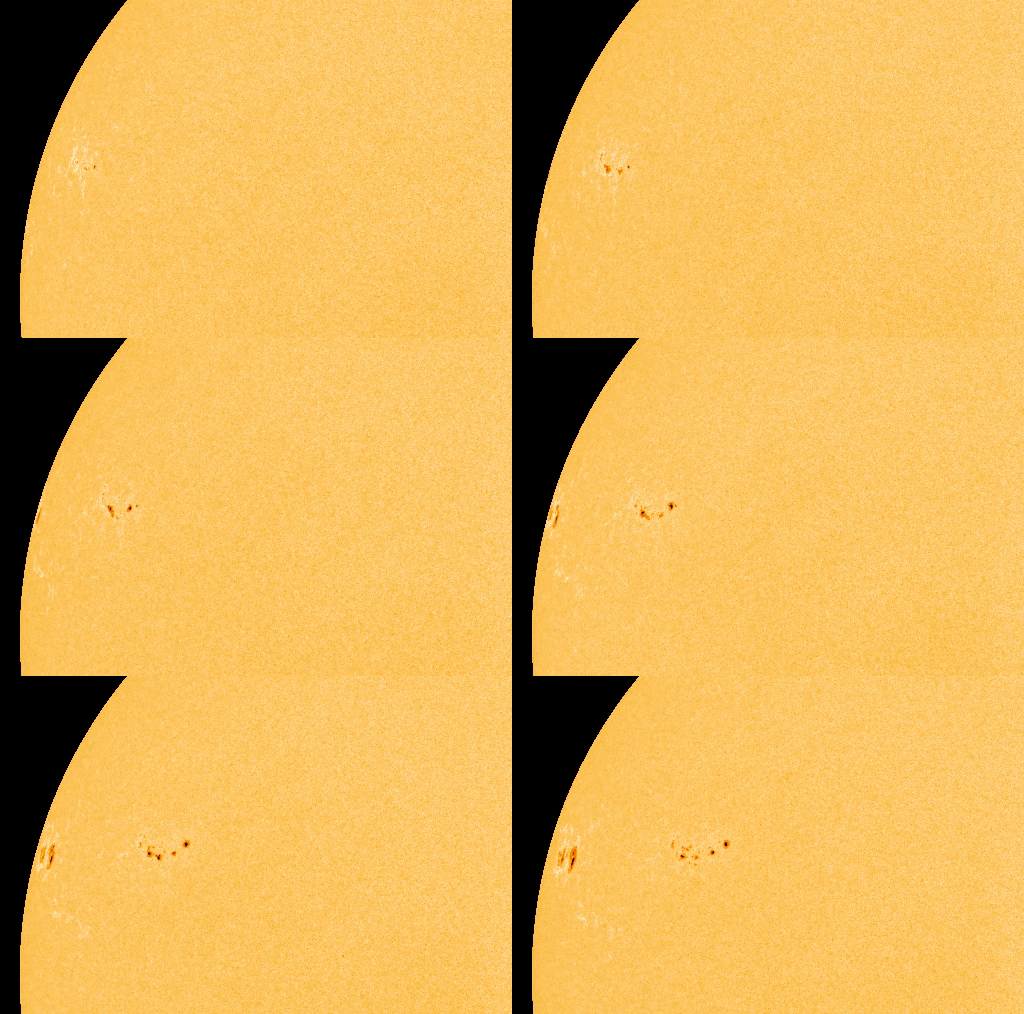
After more than a week of quiet, solar activity is picking up. NASA's Solar Dynamics Observatory is monitoring two big sunspot groups now emerging over the sun's eastern limb.
The leading sunspot group, AR1260, is crackling with C-class solar flares among a quartet of Earth-sized cores. Not far behind, sunspot AR1261 is larger and may harbor energy for flares of its own. At the moment, these two sunspot groups are too far off disk-center to affect Earth, but this will change in the days ahead.
Check out this short movie; click here

Saturday, July 23, 2011

Amateur Radio saves Man’s Life

Lee Phillips K4USS had a stroke while driving to the Upperville Horse Show, fortunately he had his ham radio w/ APRS in his truck.

Using the ham radio he was able to call friends on the air and his Automatic Packet Reporting System (APRS) provided a signal to track his position on a map

Read the Loudoun Times article at
http://www.loudountimes.com/index.ph..._mans_life111/

Automatic Packet Reporting System (APRS)
http://www.aprs.org/
This a video on YouTube showing reception of the South Sudan DXpedition station ST0R on 20m CW.

The Intrepid-DX Group and the DX Friends have combined efforts to plan the multi-national DXpedition to Southern Sudan to celebrate the birth of a new country. ST0R will be active from July 22 to August 10.

The YouTube description reads
Southern Sudan 2011 DXpedition First Amateur Radio License issued by Southern Sudan Government South Sudan.

Southern Sudan 2011
http://www.dxfriends.com/SouthernSudan2011/

W9IMS

W9IMS The Indianapolis Motor Speedway Amateur Radio Club

Brickyard 400 - July 25-31 & Red Bull Indianapolis GP - August 22-28:

We will operate from 1500Z through 0300Z on Friday, Saturday and Sunday of those two race weekends.

W9IMS info

Friday, July 22, 2011

Articles of Interest & This Weekends Contest

Here are some Articles of Interest;

ARRL Asks FCC to Keep 2300 MHz Proceeding Open


ISS crew to launch mini-satellite on August 3

Retransmission dates back to Apollo 11 days

These guys ham it up

Ham radio a calling for club aboard the USS Hornet

Aug 23, 1928

Some Doubt Expressed To Authenticity .Amateur Radio Operator Has ...


This Weekends Contest Opportunities


NAQCC Straight Key/Bug SprintJul 21
RSGB 80m Club Championship, DataJul 21
QRP Fox HuntJul 22
NCCC Sprint LadderJul 22
WAB 144 MHz QRO PhoneJul 24


KD8BIG

To my Amateur Radio Friends and anyone interested;
Follow my Amateur Radio Post on Facebook here.
Follow my Amateur Radio Tweets here.

Thursday, July 21, 2011

Space Shuttle Atlantis; LAST RE-ENTRY:

On July 21st, the crew of the International Space Station photographed an event that will never be repeated: the re-entry of a space shuttle. Marking the end of NASA's 30-year shuttle program, Atlantis dove Earthward in a fiery arc that only six lucky space travelers could see from above:

The green band of light in the background is called "airglow." Airglow is a luminous bubble that surounds our entire planet, decorating the top of the atmosphere with aurora-like color. Although airglow resembles the aurora borealis, its underlying physics is different. Airglow is caused by an assortment of chemical reactions in the upper atmosphere driven mainly by solar ultraviolet radiation; auroras, on the other hand, are prompted by gusts of solar wind.

More pictures from the last flight of Atlantis may be found here.

Wednesday, July 20, 2011

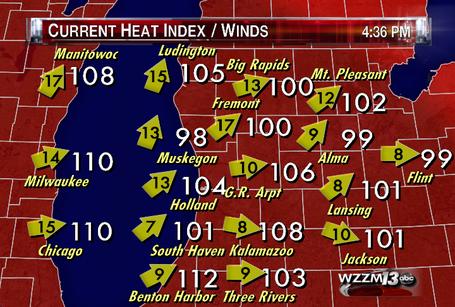
The 2011 Heat Wave

Whoa~ it is hot outside. I went out for 10 minutes, more than enough heat for me~ Was gonna do some antenna work, guess it will wait till next week sometime.
Stay cool all~

Tuesday, July 19, 2011

Loss of 2 Meter Simplex Frequencies

This is from my fellow Ham friend in Texas WX5VHF
I am spreading the word~

Loss of two meter simplex frequencies IMMINENT in Texas!

Texas two meter simplex users stand to lose a large portion of available frequencies if proposed changes to the two meter band plan are passed by the Texas VHF-FM Society.

In an effort to make room for D-Star repeater pairs, the Society has proposed a revised band plan that will take spectrum from two meter simplex users statewide.
Below is the band plan being proposed by the Texas VHF-FM Society:
146.450 - 146.490 MHz, High in/low out, 1 MHz offset, 12.5 kHz channel spacing or less, any
digital voice/data air interface technology suitable for the Amateur Radio Service that is compatible with the channel spacing. No analog transmission permitted.
145.520 Analog
145.540 Analog
145.560 Analog
145.580 Analog
145.600 Analog
145.620 Analog
145.640 Analog
145.660 Analog
145.680 Analog
145.700 Analog
145.720 Analog
145.740 Analog
145.760 Analog
145.780 Analog
146.420 Analog
146.440 Analog
146.450 Digital }
146.460 Digital }
146.470 Digital }--------------- Simplex allocations that will be lost due to proposed restructuring.
146.480 Digital }
146.490 Digital }
146.560 Analog
146.580 Analog
147.400 Analog
147.420 Analog
147.440 Analog
147.450 Digital }
147.460 Digital }
147.470 Digital }-------------- Simplex allocations that will be lost due to proposed restructuring.
147.480 Digital }
147.490 Digital }
147.560 Analog
147.580 Analog


This proposal was placed on the table at the March 1, 2008 General Meeting of the Texas VHF-FM Society and has yet to be voted on, possibly due to opposition from avid simplex users.

Contrary to public opinion, two meter simplex frequencies are regularly, and in some cases heavily used throughout the state.

A well-established group of simplex operators in north and east Texas have used the frequency of 147.420 on a daily basis since the mid 1970’s. While that frequency is not in immediate danger of being reallocated, other well used frequencies are!

A group of simplex operators around the Cedar Creek Lake area in eastern Texas that regularly use the frequency of 146.475 stands to lose that piece of spectrum.

146.500 is another frequency currently being used on a regular basis by hams from Dallas all the way down into the Waco area that is on the chopping block.

I’m sure there are many more frequencies all across the state that are in use that we do not know about! If anyone knows of other simplex frequencies in use in the state of Texas please feel free to e-mail me at WX5VHF@gmail.com

In an effort to display the utilization of these simplex frequencies I am asking for all Texas two meter simplex operators to attend and cast a vote at the Texas VHF-FM Society’s Summer Meeting that will take place at Austin Summerfest 2011. The meeting will be held Saturday, August 6th at 1:00PM in the Pecan Room of the Austin Marriott Airport South at 4415 South Interstate 35 in Austin.
In order to vote at this meeting you MUST be a member of the Society! To become a member you must download the form from the link below and send it back with $15.00. (I guess it’s sort of like a poll tax?)

http://www.txvhffm.com/images/Forms/...pplication.pdf

I believe I speak for most all avid simplex operators when I say, I am in no way anti D-Star. New technology and operating modes are the life blood of amateur radio. What I am against is reallocation of simplex spectrum as repeater pairs! D-star or analog, a repeater is a repeater and should be placed on frequencies that are already allocated for that purpose. If all of the repeater pairs are in use then get on the waiting list; just as analog repeater owners do. What is the rush?

Hams always say “Use it, or lose it” when it comes to radio spectrum. Well, this time it’s being used and we still may lose it!

Aaron Scott
WX5VHF

My Stamp Collecting Blog

Counter Added January 1, 2011

free counters

HOW TO READ PROPAGATION NUMBERS

The A index [ LOW is GOOD ]

  • 1 to 6 is BEST
  • 7 to 9 is OK
  • 11 or more is BAD

Represents the overall geomagnetic condition of the ionosphere ("Ap" if averaged from the Kp-Index) (an average of the eight 3-hour K-Indices) ('A' referring to amplitude) over a given 24 hour period, ranging (linearly) typically from 1-100 but theoretically up to 400.

A lower A-Index generally suggests better propagation on the 10, 12, 15, 17, & 20 Meter Bands; a low & steady Ap-Index generally suggest good propagation on the 30, 40, 60, 80, & 160 Meter Bands.

SFI index [ HIGH is GOOD ]

  • 70 NOT GOOD
  • 80 GOOD
  • 90 BETTER
  • 100+ BEST

The measure of total radio emissions from the sun at 10.7cm (2800 MHz), on a scale of 60 (no sunspots) to 300, generally corresponding to the sunspot level, but being too low in energy to cause ionization, not related to the ionization level of the Ionosphere.

Higher Solar Flux generally suggests better propagation on the 10, 12, 15, 17, & 20 Meter Bands; Solar Flux rarely affects the 30, 40, 60, 80, & 160 Meter Bands.

K index [ LOW is GOOD ]

  • 0 or 1 is BEST
  • 2 is OK
  • 3 or more is BAD
  • 5 is VERY VERY BAD

The overall geomagnetic condition of the ionosphere ("Kp" if averaged over the planet) over the past 3 hours, measured by 13 magnetometers between 46 & 63 degrees of latitude, and ranging quasi-logarithmically from 0-9. Designed to detect solar particle radiation by its magnetic effect. A higher K-index generally means worse HF conditions.

A lower K-Index generally suggests better propagation on the 10, 12, 15, 17, & 20 Meter Bands; a low & steady Kp-Index generally suggest good propagation on the 30, 40, 60, 80, & 160 Meter Bands.

Terms of Service

[In accordance with Title 17 U.S.C. Section 107, this material is distributed without profit, for research and/or educational purposes. This constitutes 'FAIR USE' of any such copyrighted material.]
I am not responsible for any thing that happens to your mental health, computer and all personal property because you visited my site.
This site is a collection of some things sent to me by e-mail, obtained from other blogs and the internet. If there is a picture or quote that is copyrighted to you let me know and I will remove your item .
Thoughts expressed in my blog are just that . I give My Opinion on the many events, products and how too, reported by the media and other web-sites.
Do not use this blog site to obtain weather events or disasters information. What I post may not be correct. Always get information from the proper media, weather (NWS)(NOAA)
Pacific Tsunami Warning Center and USGS sites